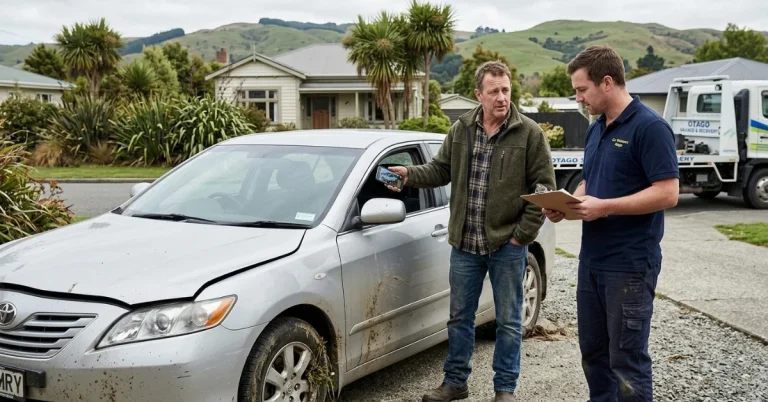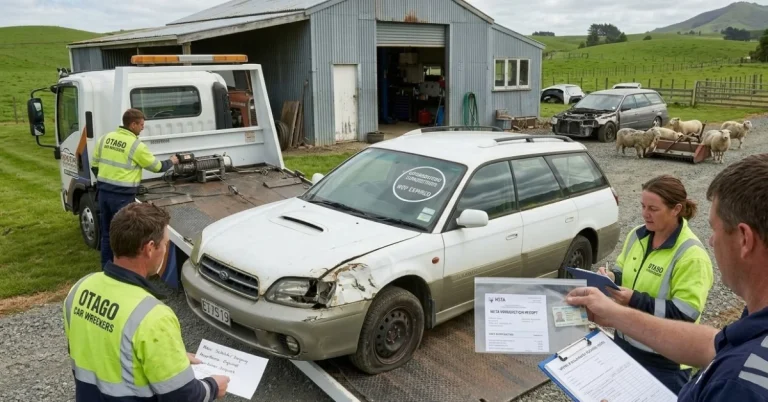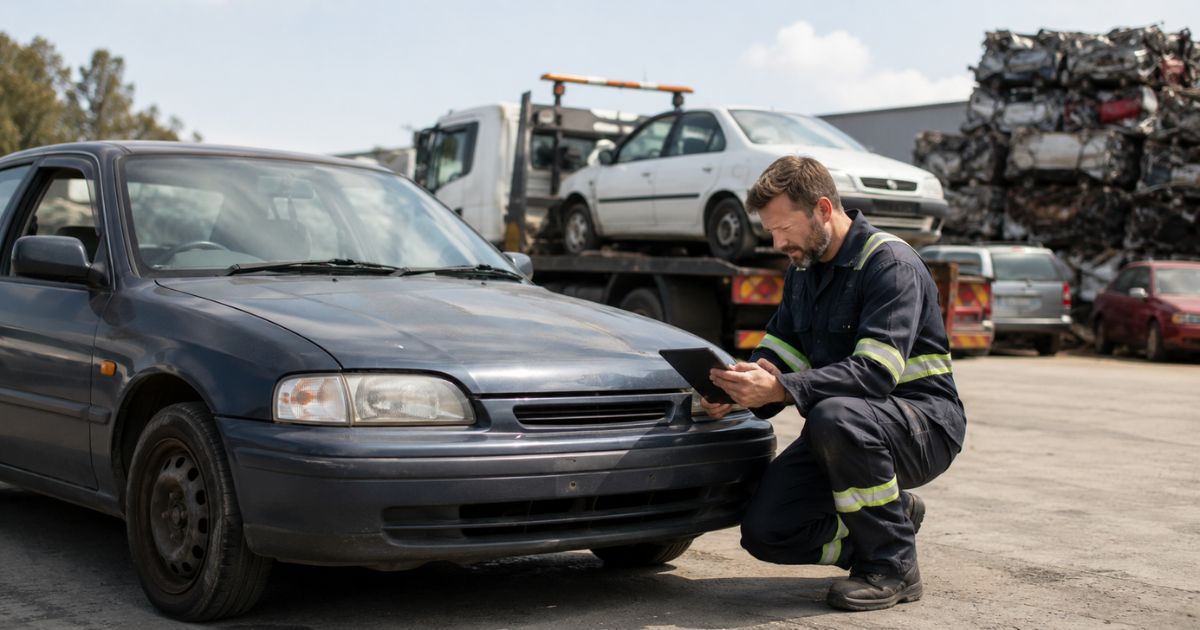
The scrap metal price NZ car owners can get for an old vehicle in 2026 comes down to far more than just weight. Two cars that look the same in the driveway can fetch very different offers, and the difference is rarely about the dents or the paint. It’s about the metal inside, the parts still worth saving, and what the market is paying that week.
If you’re staring at a tired car and wondering what it’s actually worth, this guide breaks it down in plain terms: how wreckers price your car, the metals that drive the value, and the simple things that push your offer up or down.
What your scrap car is really worth
Most scrap cars in New Zealand sell for somewhere between $150 and $10,000+. That’s a huge range, and it exists because no two cars are the same. A small stripped hatchback sits near the bottom. A heavy late-model SUV or ute with good parts can sit near the top.
Here’s the simple way wreckers think about it:
Your offer = scrap metal value + reusable parts value − the cost to collect and dismantle it.
That formula is why a complete car beats a stripped one, why a popular Toyota beats an obscure import, and why an easy driveway pickup beats a car bogged in a back paddock.
The metals inside your car (and what they’re worth)
A big chunk of your car’s value is simply the metal it’s made of, and the scrap metal price NZ car buyers work to changes with the global market. When steel, aluminium, and copper prices are up, payouts rise with them.
Here’s what’s hiding in a typical vehicle:
- Steel and iron make up roughly 65% of the car’s weight. The body, chassis, and many mechanical parts are steel, and its price tracks global construction and manufacturing demand.
- Aluminium is worth more per kilo than steel and shows up in engines, radiators, and wheels. Alloy wheels alone can add $50–$200 to an offer.
- Copper is one of the most valuable recyclable metals. A single car holds around 15–25kg of it in the wiring, alternator, and radiator.
- A catalytic converter contains precious metals like platinum and palladium, and depending on the model, can be worth $100–$500+ on its own.
This is also why stripping parts yourself usually backfires. Pull the catalytic converter, battery, or wheels, and you’ve taken the most valuable bits out of the deal.
What affects your car’s value the most
Beyond the raw metal, a handful of factors decide where your offer lands.
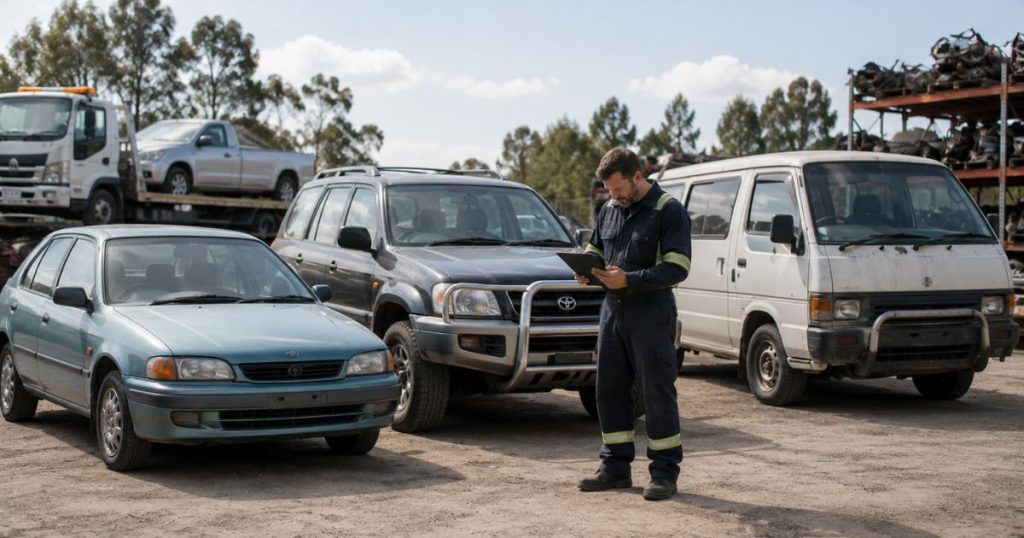
Weight and vehicle type
Heavier vehicles carry more recyclable metal, so utes, vans and 4x4s start from a higher baseline than small cars. Most wreckers begin with kerb weight, then adjust from there.
Make and model
Common Kiwi brands like Toyota, Nissan, and Holden hold their value better because their parts are always in demand. A Hilux or Corolla with usable parts is worth far more than a rare import nobody needs spares for.
Condition and running status
A car that still starts, even badly, is worth more, because the engine, gearbox, and electronics can be sold as working parts. Non-runners still have value, but mostly through salvageable components and metal weight.
Age and kilometres
Newer cars with lower kilometres tend to have more sought-after parts. That said, older isn’t worthless. A common engine in steady demand can still pull a reasonable price.
The scrap metal market
Steel, aluminium, and copper prices move constantly with global supply and demand, plus the exchange rate, since most NZ scrap is exported. Fuel and logistics costs also feed in because a wrecker still has to tow and process the car. When metal is up, so are offers.
Location and pickup
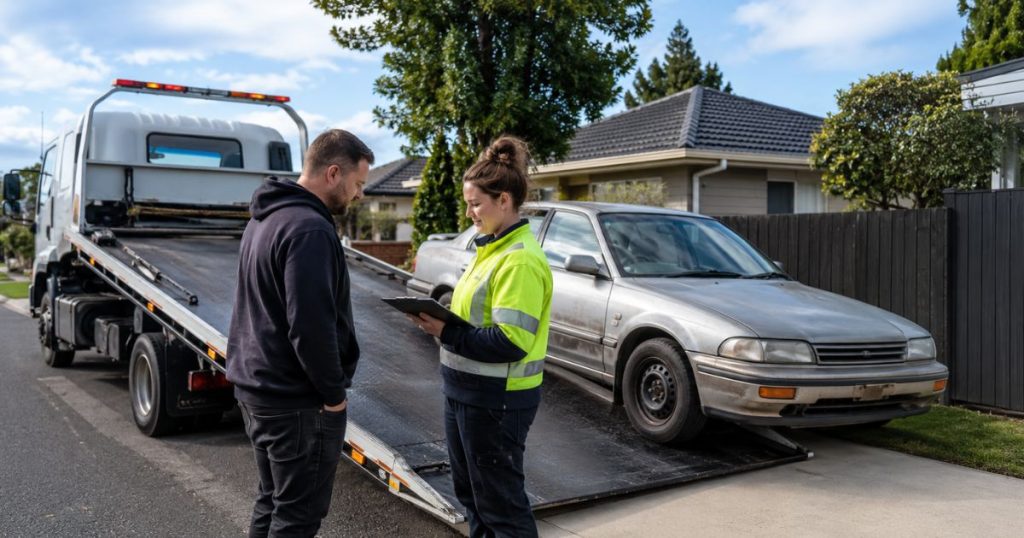
The easier your car is to collect, the better. A clear driveway costs the wrecker less in tow time than a vehicle stuck out the back, and that cost gets weighed into your quote. Free local pickup matters most when you’re outside the main centres.
Typical scrap car prices by vehicle type (2026)
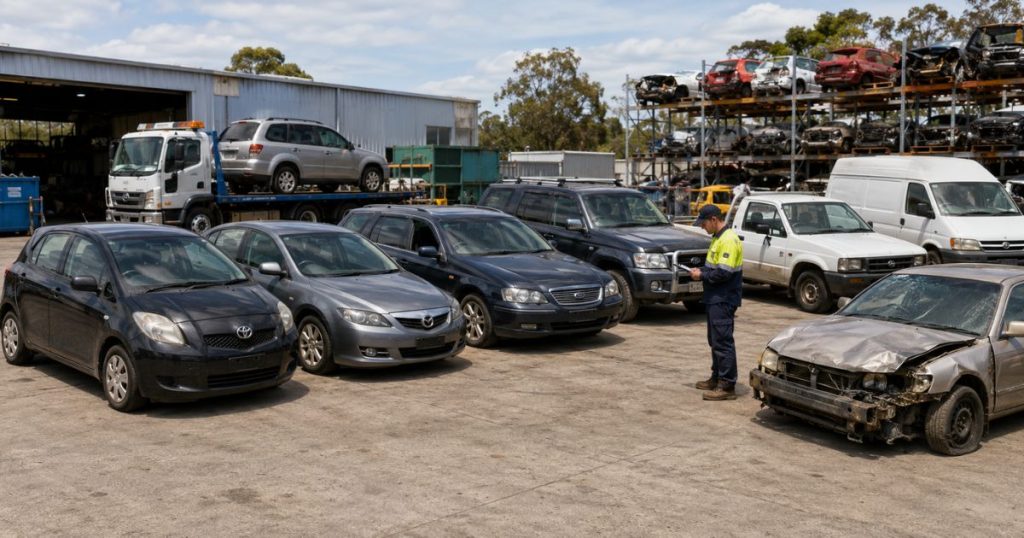
| Vehicle type | Typical price range |
| Small hatchback (Yaris, Swift) | $150 – $1,500 |
| Medium sedan (Camry, Mazda 6) | $300 – $3,000 |
| Large sedan/wagon (Commodore, Falcon) | $400 – $4,000 |
| SUV / 4×4 (Hilux, Patrol) | $500 – $6,000 |
| Ute / light commercial (Ranger, D-Max) | $500 – $5,000 |
| Van (HiAce, Express) | $300 – $4,000 |
| Non-running / accident-damaged | $150 – $2,000 |
These are ballpark figures for 2026. The only way to get a real number is a quote based on your actual car.
How to get the best price for your car
A little prep goes a long way:
- Get two or three quotes. Offers vary between yards, so compare before you commit.
- Be honest about the condition. Saying “non-running” or “rust” upfront gets you an accurate quote and no surprises on pickup day.
- Keep the car complete. Leave the battery, wheels, and catalytic converter in place. A whole car is worth more than a stripped one.
- Have your paperwork ready. Proof of ownership speeds things up, and a good wrecker can handle the deregistration for you.
- Compare the net payout. A slightly lower headline price with free towing can beat a higher one with a collection fee deducted.
Do you need a WOF or rego to sell your car?
No. Wreckers buy cars regardless of WOF or registration status. A car with no warrant or rego just can’t be legally driven, so pickup and towing become an important part. You’ll still need proof of ownership, and it’s worth notifying Waka Kotahi (NZTA) when you dispose of the vehicle so you’re not liable for it later.
Frequently Asked Questions
How much is my scrap car worth in NZ in 2026?
Why do scrap metal prices keep changing?
Should I remove parts before scrapping?
Do I get paid on the spot?
Do scrap car prices vary across NZ regions?
Is it better to scrap my car or sell it privately?
Can I sell a deregistered, written-off or flood-damaged car?
What happens to my car after it’s scrapped?
Conclution
The scrap metal price NZ car owners receive isn’t a fixed number; it’s the metal in your car, the parts still worth saving, and what the market is paying right now. Keep the car complete, be upfront about its condition, and compare a couple of offers, and you’ll walk away with a fair price for something that was only taking up space.