
If you’ve ever asked yourself, “Is it worth repairing my car?”, this NZ cost guide will help you answer it in just a few minutes. Picture the moment: your car has been towed to the workshop, the mechanic rings with a quote, and the number makes your stomach drop. Do you pay up, or is it finally time to let the car go? It’s a stressful call, and an expensive one. In New Zealand, a single big repair like a transmission can average around $9,600, often more than the car is even worth on a good day.
The good news? There’s a simple way to work out the right answer for your situation, without the guesswork.
The short answer
Whether your car is worth repairing comes down to one comparison: the repair bill versus what your car is actually worth today. Get those two numbers side by side, and the decision almost makes itself.
As a quick rule:
- Repair it if the fix costs less than half of the car’s current value and the car is otherwise reliable.
- Sell or scrap it if the repair costs more than half its value, or the car is old, high-kilometre, and failing in more than one place.
The rest of this guide explains how to get those numbers, what common repairs actually cost in New Zealand, and what your options are if the maths doesn’t add up.
The 50% rule: the simplest test there is
Mechanics and insurers have used the same rough guide for years. It’s known as the 50% rule, and it’s the easiest way to cut through the stress.
The benchmark question is simple: Is the repair less than half of the car’s market value?
- If yes, repairing is usually worth it.
- If no, it’s a strong sign you’re throwing good money at a car that’s on its way out.
Here’s how it plays out with real numbers. Say your car is worth about $6,000 running, but it needs $2,500 of work. That’s roughly 42% of its value, so fixing it makes sense you keep a car you know the history of, now with fresh parts. Flip it around: if the same car is only worth $4,000 and needs a $2,800 repair, you’re past 70% of its value. At that point, scrapping or replacing is the smarter move.
One small tweak: for older cars (10-plus years, or over 150,000 km), drop the threshold to around 40%. Older vehicles tend to fail in clusters, so the next bill is rarely far behind.
How much do common car repairs cost in NZ?
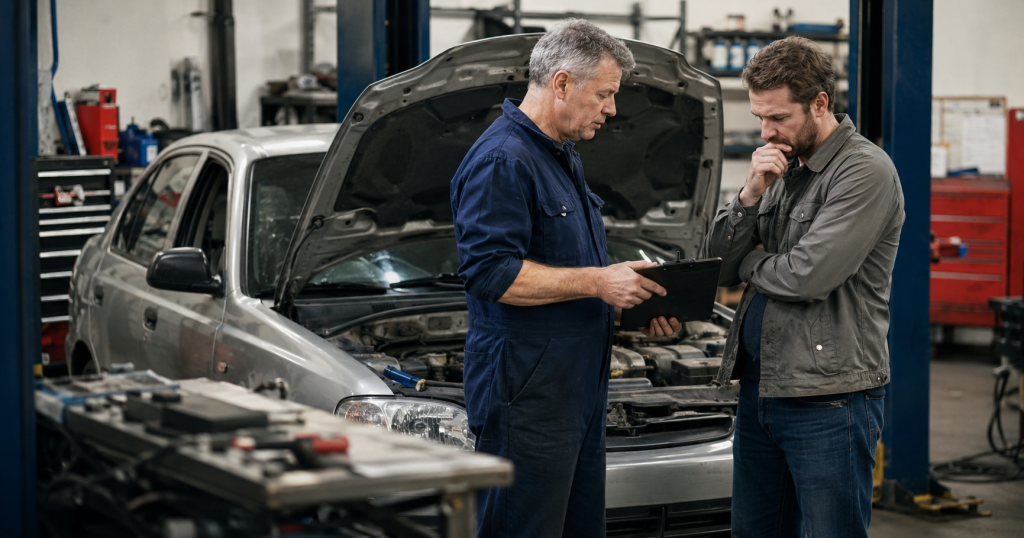
In New Zealand, the big repairs that usually trigger the “repair or scrap” decision range from around $3,500 for an engine computer (ECU) up to roughly $9,600 for a transmission. Head gaskets, power steering, and air conditioning typically sit in between. These are the bills that most often outweigh an older car’s value.
To use the 50% rule, you need a realistic idea of what the repair will cost. Here are the big-ticket items that most often force the “repair or replace” decision in New Zealand.
| Repair | Average cost (NZD) |
| Transmission/gearbox | ~$9,600 |
| Air conditioning system | ~$8,600 |
| Head gasket | ~$5,900 |
| Power steering | ~$4,300 |
| Engine computer (ECU) | ~$3,500 |
| Full service | $300 – $450 |
| Major service | $400 – $600+ |
These are averages and will vary by make, model, and where you live. In our 12 years dismantling cars across Otago, the BMWs, Audis and Mercedes we strip almost always carry parts prices 30–50% higher than the Toyotas and Mazdas which is exactly why repair quotes on European cars cross the 50% line so quickly.
There’s also a 2026 reality to factor in: workshop time and parts aren’t getting any cheaper. Repair bills keep climbing, and that’s pushing more Kiwis to scrap older cars rather than sink thousands into them.
It’s not just about the money: 4 other signs to let go
The 50% rule covers the wallet, but a few other warning signs tell you the car has reached the end of the road.
Age and kilometres
Once a car passes 10 years or 150,000 km, rubber parts, electronics, and major systems start wearing out together. Fix one, and another fails soon after.
The same problem keeps coming back.
If you’ve already paid to fix an issue and it returns overheating, a slipping gearbox, or a recurring electrical fault- it usually points to deeper damage. That’s money down the drain.
A failed WOF with a stack of jobs.
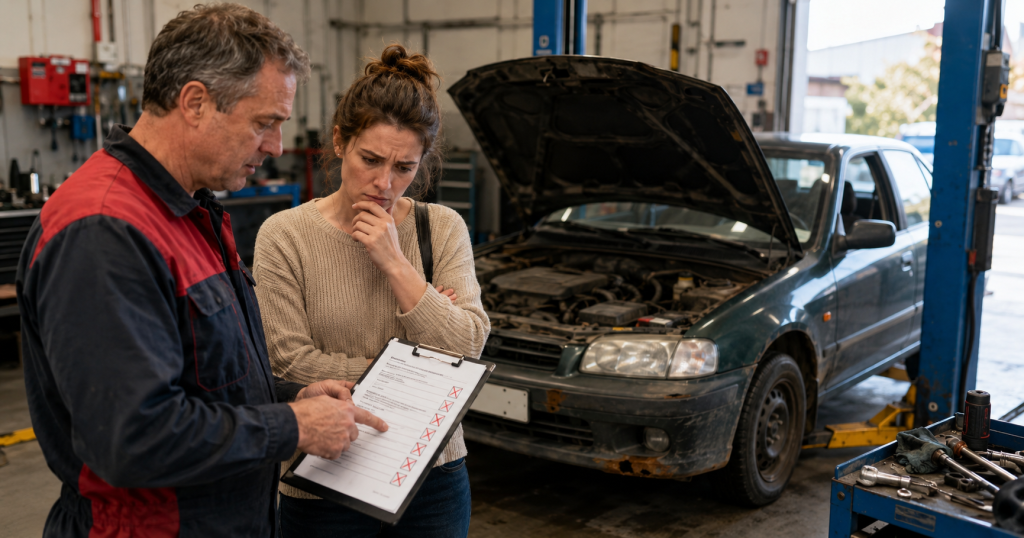
One WOF failure is manageable. But when three to five issues land at once, the combined bill often outweighs the car. A failed Warrant of Fitness is the single most common trigger for the “scrap or repair” decision in NZ.
Safety and rust
Newer cars are simply safer, and rust is a money pit, it spreads underneath where you can’t see it. If the car isn’t safe or the body is going, repairing it rarely pays off.
When repairing IS the smart move
To be fair, it’s not always goodbye. Repairing your car is the right call when:
- It’s a one-off fix like a starter motor or alternator on a car that’s otherwise sound.
- The repair is well under half the car’s value.
- The car has a solid service history, and you know it’s been looked after.
- A reasonable repair buys you another year of motoring while you save for an upgrade.
In these cases, spending a few hundred dollars to keep a reliable car on the road beats taking on the cost and hassle of replacing it.
Repair, replace, or scrap: your three options
If the maths says don’t repair, you’ve got three ways to move on.
Sell it privately
This can fetch the best price if the car still runs, but it’s the slowest route listings, viewings, time-wasters, and tyre-kickers.
Trade it in
Quick and easy, but dealers offer low trade-in values for a car with faults, so you’ll leave money on the table.
Scrap it / cash for cars
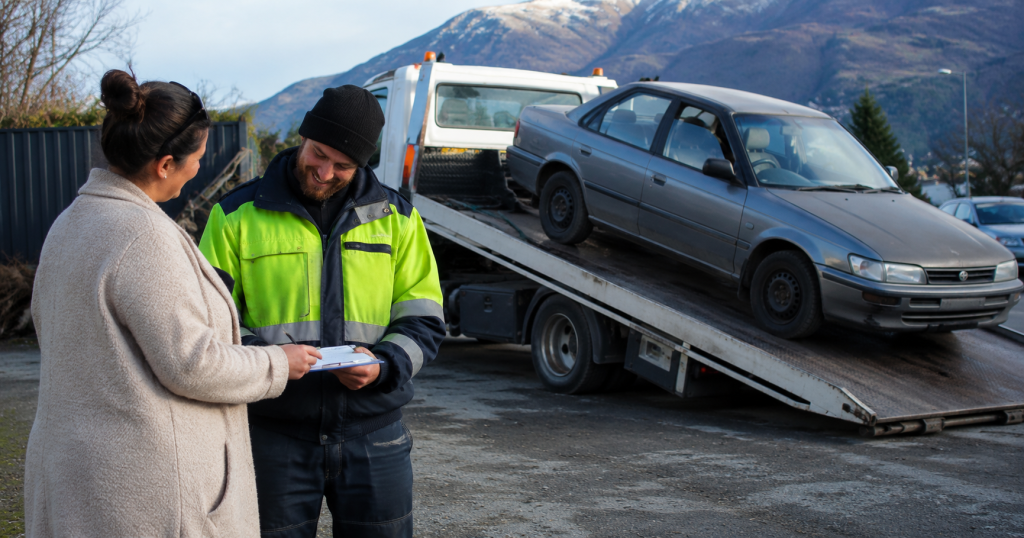
The fastest and least stressful option, especially for a car that’s damaged, non-running, or failed its WOF. A car wrecker pays cash for the parts and scrap metal, and good ones include free removal, so you don’t lose any of your payout to towing.
Even a “dead” car holds real value. Salvageable parts and scrap metal mean a wrecker will often pay you when a dealer won’t touch it.
Frequently Asked Questions
What’s the rule for deciding to repair or replace a car?
Is it worth repairing a car with over 200,000 km?
Does a failed WOF mean my car isn’t worth repairing?
How much does a transmission repair cost in NZ?
Can I sell my car if it doesn’t run or has no WOF?
How much is my old car worth as scrap in NZ?
Will repairing my car increase its resale value?
How fast can I scrap my car in Otago?
The bottom line: should you repair or replace?
So, is it worth repairing your car? Run the 50% test. If the repair costs less than half of what your car is worth and the car is otherwise reliable, fix it and keep driving. But if the bill is more than half its value or you’re staring down a failed WOF, recurring faults, and a tired old car it’s time to stop pouring money into it.
What this looks like in Otago
If you’re in Dunedin, Mosgiel, Oamaru, Balclutha, Alexandra, Cromwell, Queenstown, or Wanaka and the repair just isn’t worth it, you don’t have to deal with the headache of a private sale. A local car wrecker can give you a fair cash offer and pick the car up for free no WOF, no rego, no problem.
At Car Wreckers Otago, we’ve been buying cars across the Otago and Southland region for over 12 years. Whether your car is broken, crashed, rusted, deregistered, or has just sat in the paddock for years, we’ll take it off your hands, pay you cash, and handle the removal at no cost to you.
Get a free cash quote today
Don’t let an unwanted car sit there rusting and losing value. Get your free, no-obligation quote from Car Wreckers Otago today we pay top cash for cars in any condition, with free same-day removal anywhere in Otago. Fill out the quick quote form or give us a call, and you could have cash in hand by the end of the day.