Repair or Scrap Old Car in NZ? The right choice depends on repair costs, condition and safety. Minor repairs may be worth it, but major problems and repeated breakdowns can make keeping your car expensive.
If your car needs frequent repairs, compare the repair estimate with its current market value. Ask a mechanic to inspect it and explain whether further repairs are worth the cost.
This guide covers when to repair an old car, seven signs it may be time to scrap it, and what happens when you sell it to a wrecker in New Zealand.
When Is It Worth Repairing an Old Car?
Repairing an old car is worth considering when the repair cost is affordable and the vehicle can remain safe and reliable. A faulty battery, worn brake pads or minor electrical problem may not be a reason to scrap an otherwise healthy car.
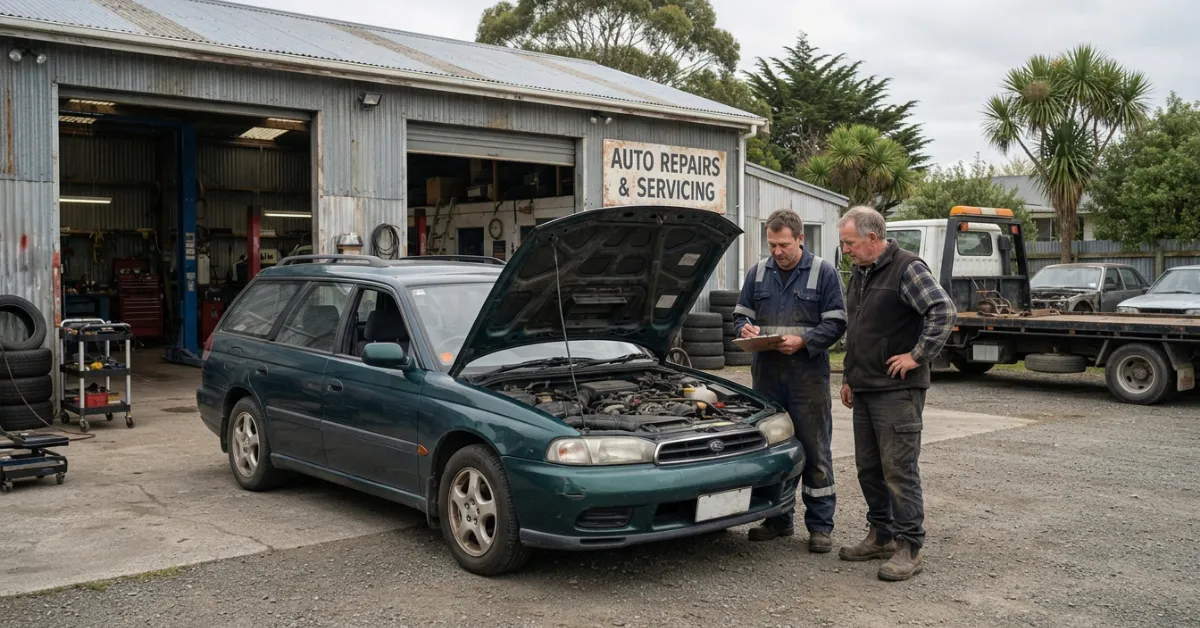
Before paying for repairs, ask a qualified mechanic to inspect the vehicle and provide a written estimate. Find out which repairs are urgent, what each repair will cost and whether other major problems are likely. Consumer Protection New Zealand also advises car owners to discuss repair costs and whether fixing the vehicle is worthwhile.
Repairing may make sense if the engine and transmission are in good condition, the vehicle has no serious structural damage and it does not break down regularly. However, if several expensive repairs are needed at the same time, calculate the total cost before making a decision.
7 Signs You Should Scrap Your Old Car Instead of Repairing It
Your car’s age alone does not tell you when to scrap it. The cost of repairs, frequency of breakdowns and condition of major components provide a clearer picture. These seven signs can help you decide whether continuing to repair the vehicle is worth the expense.
1. Repair Costs Are Higher Than the Car’s Value
If repairing your old car costs more than its current market value, you could spend more on repairs than the vehicle is worth. For example, if your car is worth $2,000 but the mechanic estimates $2,500 for repairs, the numbers suggest that keeping it may not be financially sensible.
However, do not compare only the repair bill with the car’s value. Consider its condition after repairs, expected maintenance costs and how long you plan to keep it. A vehicle that needs several more repairs may cost much more than the first estimate.
2. Your Car Keeps Breaking Down
If your car needs repairs every few weeks or months, the total cost can become difficult to manage. Repeated breakdowns can also affect your daily travel, especially when the vehicle stops working unexpectedly.
Keep a record of repair bills over the past 12 months. Add the costs together and compare them with the car’s current value. If new problems continue appearing after each repair, ask your mechanic whether more major repairs are likely.
3. It Has Serious Engine or Transmission Problems
Major engine or transmission problems can require expensive repairs or replacement parts. Serious engine damage, repeated overheating and transmission failure can all affect how safely and reliably your car operates.
Ask your mechanic for a diagnosis and a written estimate before approving the work. Find out whether the engine or transmission can be repaired and whether other components have also been damaged. Compare the full repair cost with the vehicle’s value before deciding.
4. It Has Failed Its Warrant of Fitness (WoF)
A failed Warrant of Fitness (WoF) does not automatically mean your car should be scrapped. Some problems, such as faulty lights, worn tyres or damaged wipers, may be inexpensive to fix.
The decision becomes more difficult when the inspection identifies several problems that need costly repairs. Ask for a list of failed items and their estimated repair costs. If the total is close to or higher than the car’s value, compare the cost of repairing it with the cost of replacing it.
Remember that a vehicle must meet the relevant safety requirements before it can be used on the road.
5. Rust or Body Damage Makes It Unsafe
Severe rust, accident damage and structural problems can affect a vehicle’s safety. Rust in important structural areas may require extensive repair work, while serious accident damage can affect the vehicle’s frame and other components.
Ask a qualified mechanic or vehicle repair specialist to inspect the damaged areas. Find out whether the car can be repaired safely and how much the work will cost. If the damage is extensive and the repair cost is higher than the vehicle’s value, spending more money may not be worthwhile.
6. You Are Spending More on Repairs Than You Planned
An old car may need several different repairs over a short period. You might replace the battery one month, repair the suspension a few months later and then face another engine or electrical problem.
Keep all repair invoices and calculate your total spending over the past year. This gives you a clearer picture than looking at each repair separately. If maintenance costs keep increasing and the car still develops new problems, compare those expenses with the cost of owning another vehicle.
7. You No Longer Need or Want the Vehicle
You may no longer need your old car after buying another vehicle, moving closer to work or changing your travel arrangements. An unused car still takes up parking space and may need maintenance if you want to keep it in working condition.
Check whether keeping the vehicle has any real benefit. If you do not plan to drive it again, selling it may be more useful than leaving it unused for months. Its condition, registration status and demand for its parts can affect its resale or scrap value.
Repairing vs Scrapping: Which Costs Less?
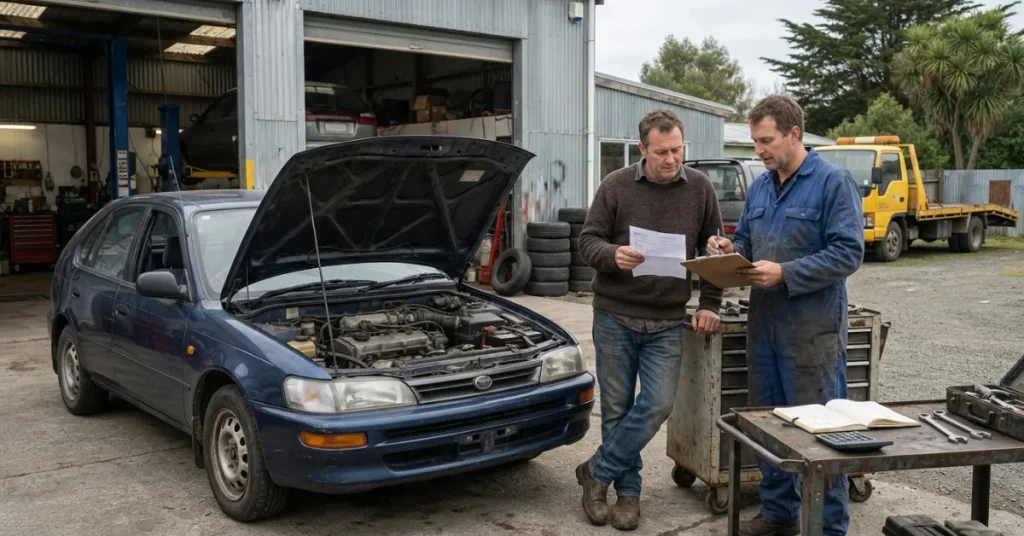
Repairing your car may cost less if it only needs minor work. But if it keeps breaking down or needs major repairs, scrapping it may save you from spending more money.
For example, if your car is worth $3,000 and the repair estimate is $2,200, repairing may seem like the cheaper option. However, you also need to consider other problems, such as worn tyres, suspension damage or engine issues.
Before deciding, compare the repair cost with your car’s current value. Also consider whether the repairs will keep it reliable or if you may face more expenses soon.
Should You Sell Your Old Car Privately or to a Wrecker?
The condition of your vehicle can help you decide between a private sale and selling to a wrecker. A car that runs well, has a valid WoF and needs only minor maintenance may attract private buyers.
A private sale usually involves advertising the vehicle, answering questions, arranging inspections and agreeing on a price. Buyers may also ask for a test drive or an independent vehicle inspection.
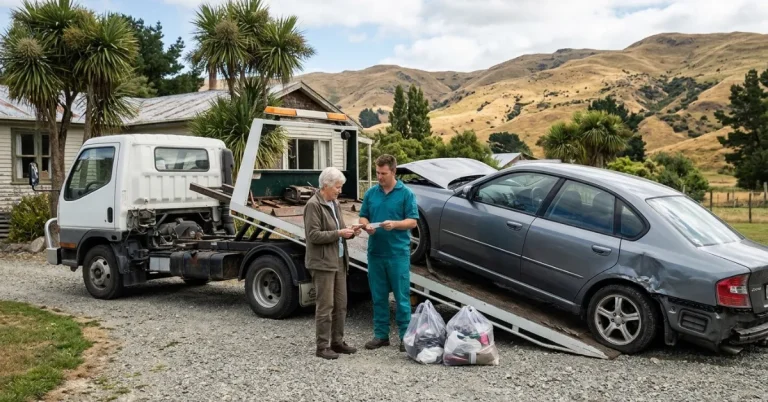
A wrecker may be an option for vehicles that are damaged, no longer running or too expensive to repair. The offer can depend on the vehicle’s make, model, condition, reusable parts and scrap metal value. Compare the amount offered with any private-sale estimate before choosing.
What Happens to Your Car After It Goes to a Wrecker?
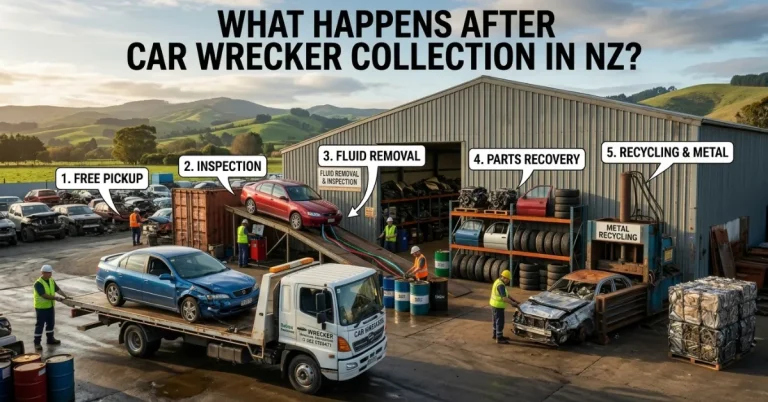
When a wrecker receives an old vehicle, it may inspect the car to identify parts that can be reused and materials that can be recycled. The process depends on the vehicle’s condition and the type of components it contains.
Usable engines, gearboxes, doors, mirrors, lights and other components may be removed and checked for resale. Parts that are damaged or unsuitable for reuse may be separated for recycling or disposal.
The vehicle’s fluids and other materials also need appropriate handling. Remaining metal can be processed for recycling. This allows some materials from an end-of-life vehicle to be used again instead of sending the entire car to landfill.
NZTA Rules for Selling a Car to a Wrecker
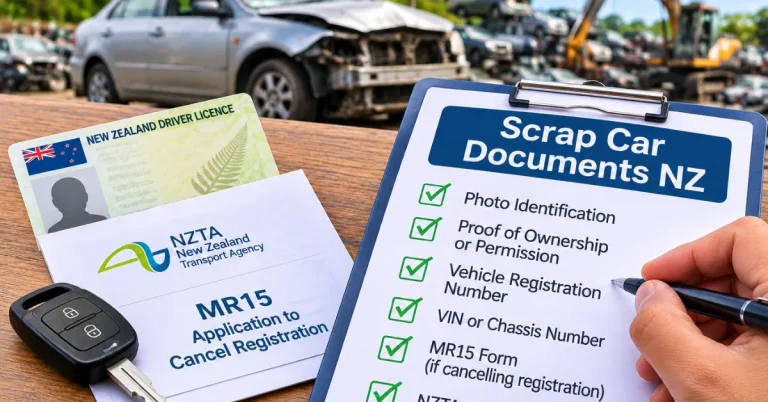
When selling your car to a wrecker in NZ, you must notify NZTA about the sale if the vehicle is registered. Both the seller and buyer have separate notification responsibilities.
If you cancel the registration before selling, you need to complete an MR15 application through a registration agent and hand in the number plates.
Check the NZTA guide to selling your vehicle to a wrecker for the correct steps.
Final Thoughts
Repairing an old car makes sense when the work is affordable and the vehicle can remain safe and reliable. However, repeated breakdowns, serious engine problems, structural damage and expensive WoF repairs can make keeping it costly.
Before making a decision, get a written repair estimate, check the car’s current market value and consider possible future maintenance. Compare these costs with the amount you could receive from selling the vehicle. This gives you a clearer basis for deciding whether to repair or scrap your old car in NZ.
Frequently Asked Questions
Is it better to scrap an old car or repair it?
Repair it if the cost is reasonable and the car is safe to drive. If repairs cost more than the car is worth, scrapping may be a better option.
When should I stop repairing my old car?
Consider stopping when repair costs become too high or the car keeps breaking down. Ask a mechanic if further repairs are worth the money.
Can I sell a car that no longer runs in NZ?
Yes. You can sell a non-running car to a wrecker. The offer may depend on its condition and usable parts.
Can I get cash for a car that has failed its WoF?
Yes. You can ask a wrecker to buy your car even if it has failed its WoF. The offer depends on its condition.
Do car wreckers buy damaged and unwanted cars?
Yes. Many car wreckers accept old, damaged and unwanted vehicles. Contact them to check which vehicles they accept.
Do I need to deregister my car before scrapping it in NZ?
It depends on your car’s registration status. Check the NZTA guide to selling a car to a wrecker for the correct steps.