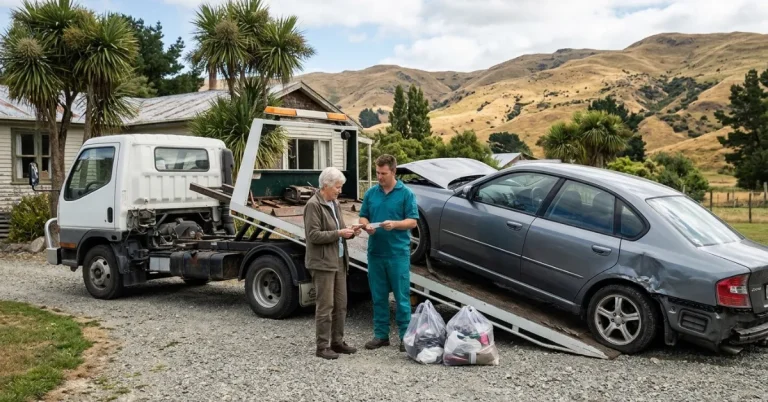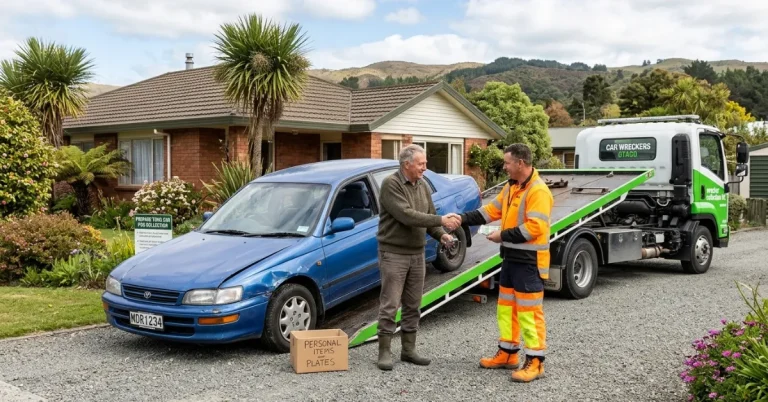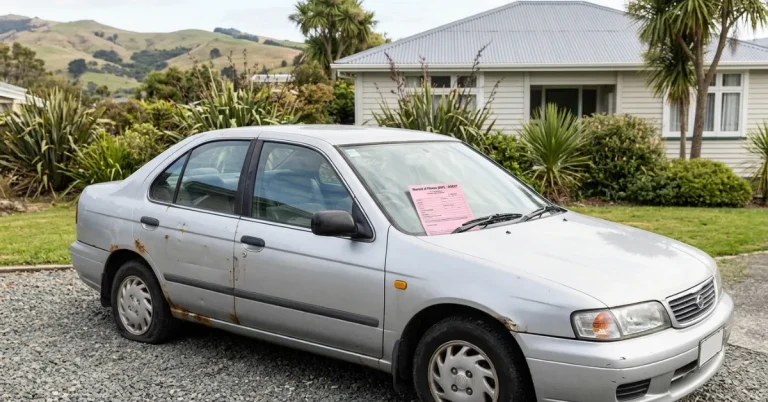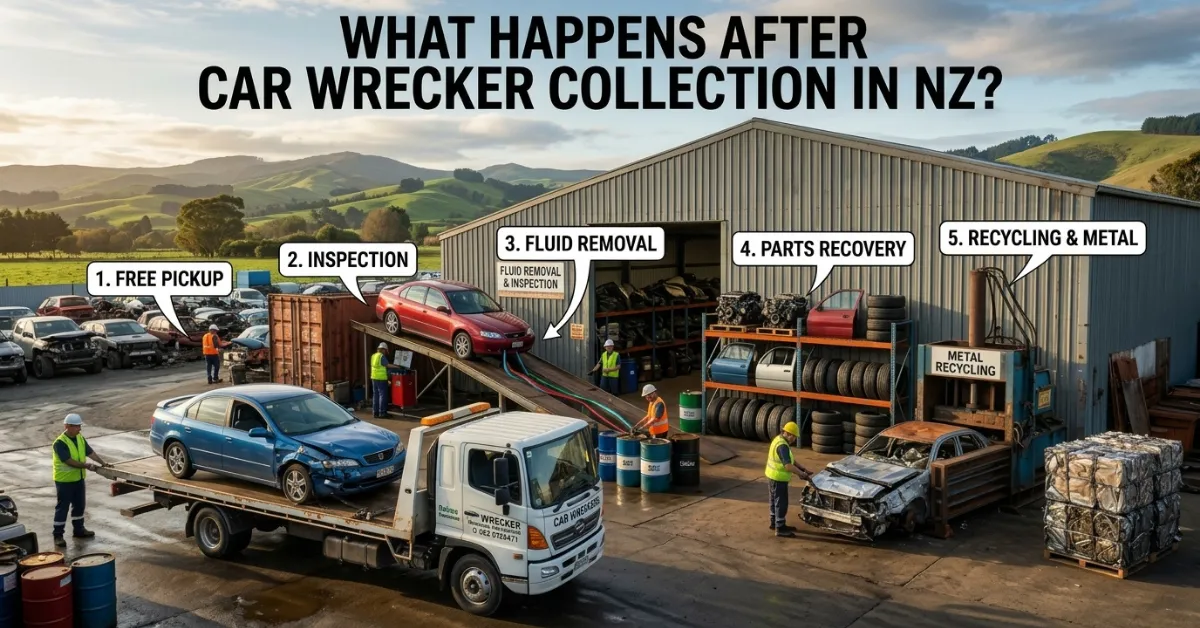
Car Wrecker Collection NZ starts with arranging a pickup for your unwanted vehicle. Once collected, your car is taken to the wrecking yard for inspection, fluid removal and parts recovery. Usable parts are prepared for reuse, while the remaining materials are sent for recycling.
Even a car with a failed WoF, engine problems or accident damage may still have parts that can be used in other vehicles. These parts are checked before being sold as used replacements, helping other drivers find affordable options for repairs. At Car Wreckers Otago, we buy cars like these for cash with free pickup.
This guide explains what happens to your car after collection, including vehicle inspection, parts removal, material recycling and the NZTA paperwork involved when selling a registered vehicle to a wrecker.
How Car Wreckers Recycle Your Old Car: Step-by-Step
After we collect your old, damaged or unwanted car, we bring it to our yard for a closer look. We check the vehicle, remove the fuel and other fluids, and find out which parts are still in good condition.
We remove usable parts so other drivers can buy them, while the remaining materials are sent for recycling. Here is how we handle your car from collection to recycling.
1. Car Wrecker Collection NZ: Free Car Pickup to Our Milton Yard
Once you accept our offer, we arrange a free car collection from your property and bring your vehicle to our yard at 10 Union Street, Milton. We collect cars from homes, farms and businesses across Otago, Southland and the wider South Island. You also get paid when we pick up your car.
Your car doesn’t need to be running or in good condition. We can collect damaged cars, non-runners and vehicles with missing keys. Just let us know the car’s condition and access details when booking.
Before pickup day:
- Check the glove box, boot, door pockets and under the seats.
- Remove toll tags, parking permits and child seats.
- Unpair your phone and clear saved addresses from the stereo or screen.
- Have your ID and vehicle details ready.
Once your car leaves with us, getting forgotten items back may not be possible.
Want to know more? Visit our free car removal page.
Make the pickup instructions more conciseAdd a clearer booking call to action.
2. Inspecting Your Car at Our Yard
Once your car arrives at our yard, we record its details and check which parts are still in good condition. This helps us decide what can be reused and what needs to go for recycling.
We check the main parts of your car, including:
- Engine and gearbox: We check for major damage and signs of mechanical problems.
- Body panels: We look at doors, bonnets, guards and bumpers for damage.
- Interior: We check seats, dashboard, switches and other fittings.
- Electrical parts: We inspect lights, alternators, starter motors and control units.
- Wheels and tyres: We check tyre condition, tread and sidewalls.
- Rust and accident damage: We look at damaged areas and parts that are still usable.
Even if your car has a blown engine or front-end damage, other parts may still be in good condition. For example, the doors, rear lights, seats or gearbox may be suitable for reuse.
3. Removing Fuel, Oil and Other Fluids
Before we take your car apart, we drain the fuel, engine oil and other fluids. This helps prevent leaks and keeps the vehicle safe for dismantling and recycling.
Most cars contain several fluids that need to be removed, including:
- Petrol or diesel
- Engine oil
- Coolant
- Gearbox or transmission fluid
- Brake fluid
- Power steering fluid
- Windscreen washer fluid
We collect these fluids separately and send them for proper treatment, recovery or disposal. This helps prevent harmful liquids from leaking into the ground or nearby waterways.
Air conditioning gas: The gas inside the air conditioning system needs to be safely recovered by a qualified person rather than released into the air.
Airbags: We also make airbags and seatbelt safety systems safe before dismantling or crushing the vehicle.
4. Removing Parts That Can Be Reused
After making the car safe, we remove the parts that are still in good condition and can be used in other vehicles. Each part is checked before being sold as a used replacement, giving drivers a more affordable option than buying new parts.
Some parts we commonly recover include:
- Engines and engine parts
- Gearboxes and differentials
- Doors, bonnets, guards and bumpers
- Headlights and tail lights
- Mirrors, windows and windscreens
- Seats and interior parts
- Alternators and starter motors
- Suspension parts
- Electronic modules and switches
Not every part can be reused. For example, cracked headlights, badly damaged panels or worn-out starter motors are sent for recycling instead.
Many South Island drivers look for used parts for popular vehicles such as Toyota Hilux, Nissan Navara and Subaru models. Buying a suitable used part can help reduce repair costs while keeping a working vehicle on the road.
5. Sorting Batteries, Tyres and Other Recyclable Materials
After removing the reusable parts, the remaining materials are separated for reuse or recycling. Batteries, tyres, catalytic converters, glass, plastics and metal each need different handling. This helps recover useful materials and reduces waste from old vehicles.
Car Batteries
Car batteries contain lead and acid, so they need to be handled separately from general waste. If a battery is still in good condition, it may be tested for reuse. Damaged or unusable batteries are sent to specialist recyclers, where materials such as lead and plastic can be recovered.
Tyres and Wheels
Tyres with good tread and safe sidewalls may be checked for resale as used tyres in Otago. Worn or damaged tyres can be collected through Tyrewise, New Zealand’s tyre recycling scheme, and sent to registered processors. Alloy and steel wheels may also be reused if they are in suitable condition.
Catalytic Converters
Catalytic converters contain small amounts of valuable metals, including platinum, palladium and rhodium. They are removed and sent to specialist recyclers to recover these materials.
Glass, Plastics and Electronics
Windscreens, plastic trim, wiring and other electronic parts are separated where suitable recycling options are available. Copper wiring can also be recovered and sent for metal recycling.
6. How Old Car Bodies Are Recycled into Metal
Once all reusable parts and other materials have been removed, the remaining car body is mostly steel. Instead of sending it to landfill, the metal shell is sent to a recycling facility where it is processed and prepared for reuse.
The recycling process usually involves these steps:
- Final check: The remaining shell is checked for leftover parts, fluids or other materials.
- Crushing: The car body is flattened or crushed to make transportation easier.
- Transport: The crushed shell is sent to a metal recycling facility.
- Shredding and sorting: The metal is shredded, then machines separate steel from aluminium, copper and other materials.
- Metal recovery: The sorted metals are sent for processing and used to make new products.
Steel from old cars can be recycled and used again in products such as building materials and machinery. This allows useful metal to be recovered instead of letting it go to waste.
7. Benefits of Car Recycling in Otago
Car recycling helps keep unwanted vehicles out of farms, roadsides and landfill while making usable parts available to drivers across Otago. It also allows valuable materials like steel, aluminium and copper to be recovered instead of wasted.
Here are some key benefits of recycling old cars:
- Lower repair costs: Used car parts give local drivers a more affordable option than buying new replacements.
- Less waste: Recovering metal and other materials means fewer useful resources are thrown away.
- Cleaner land and water: Removing fuel, oil, batteries and other harmful materials helps prevent leaks and pollution.
- Fewer abandoned cars: Free car removal gives vehicle owners an easier way to get rid of unwanted cars instead of leaving them on their property.
Not every car part can be reused. Parts from badly burnt, flooded or contaminated vehicles are not sold for reuse. They are sent for suitable recycling or disposal instead.
NZTA Paperwork When Selling Your Car to a Wrecker
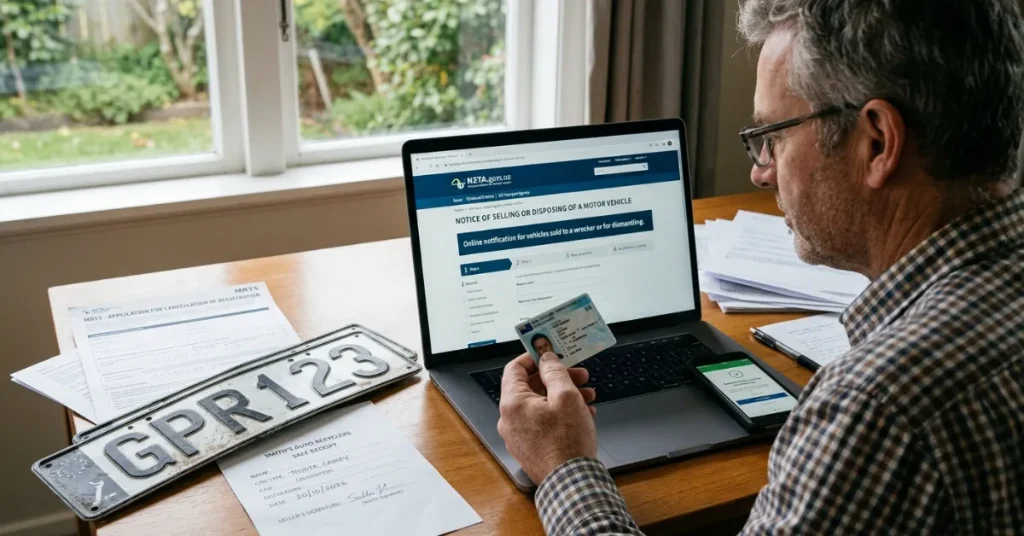
When you sell your registered car to a wrecker in NZ, you need to let NZTA know about the sale. You can do this online or by phone using your number plate and driver licence details. Once NZTA receives your notification, the wrecker takes care of cancelling the vehicle’s registration.
What You Need to Do:
- Tell NZTA about the sale: Complete the NZTA seller notification on the day you sell your car.
- Keep the sale details: Write down the date and time of the sale, along with the wrecker’s business name and address.
- Check if you can get a rego refund: If you want to claim a refund for unused licence fees, you can cancel the registration before selling the car. Visit an AA or VTNZ agent with an MR15 form and hand in the number plates.
If your car has already been dismantled or destroyed, NZTA may ask for a letter from the wrecker confirming this. You can ask us for that letter.
Why Should You Notify NZTA?
If you don’t tell NZTA that you have sold your car, fines or toll charges linked to its number plate could still come to you. Taking a few minutes to complete the notification can help avoid problems later.
Your Old Car Still Has Work to Do
An old car can still be useful even when it is no longer safe or practical to drive. After collection, usable parts are removed and checked for reuse, while materials such as steel, aluminium and other metals are sent for recycling. This means a vehicle that has reached the end of its road life can still provide useful parts and materials.
For car owners in Otago, Southland and the West Coast, selling an unwanted car to a wrecker is one way to have it collected and put through the recycling process. Even cars with engine problems, accident damage or failed WoF may still contain parts worth recovering. If your car is ready to go, contact us for a free cash quote and pickup.
Frequently Asked Questions
1. Do Car Wreckers Crush Every Car They Collect?
No. We first remove usable parts, fluids, batteries and tyres. Only the remaining car shell is crushed and sent for metal recycling.
2. Can Parts From an Accident-Damaged Car Be Reused?
Yes. Parts that are not damaged in the accident, such as doors, tail lights, seats and gearboxes, may still be reused. Each part is checked before resale.
3. What Happens to Oil and Fuel in a Scrap Car?
Fuel, engine oil and other fluids are drained before dismantling. They are stored separately and sent for proper treatment, recovery or disposal.
4. Do I Need to Notify NZTA When I Sell My Car to a Wrecker?
Yes. You must notify NZTA when you sell a registered car to a wrecker. You can do this online or by phone. The wrecker then handles the registration cancellation.
5. Can I Get a Rego Refund When My Car Is Wrecked?
Yes, you may be able to get a refund for unused licence fees. You need to cancel the registration through an authorised agent, complete an MR15 form and return the number plates. If the car has been dismantled, NZTA may also ask for a confirmation letter from the wrecker.
6. Can I Sell a Car That Does Not Run to a Wrecker?
Yes. You can sell a non-running car to a wrecker. Even if it has engine problems, accident damage or a failed WoF, it may still have parts that can be reused or recycled.